
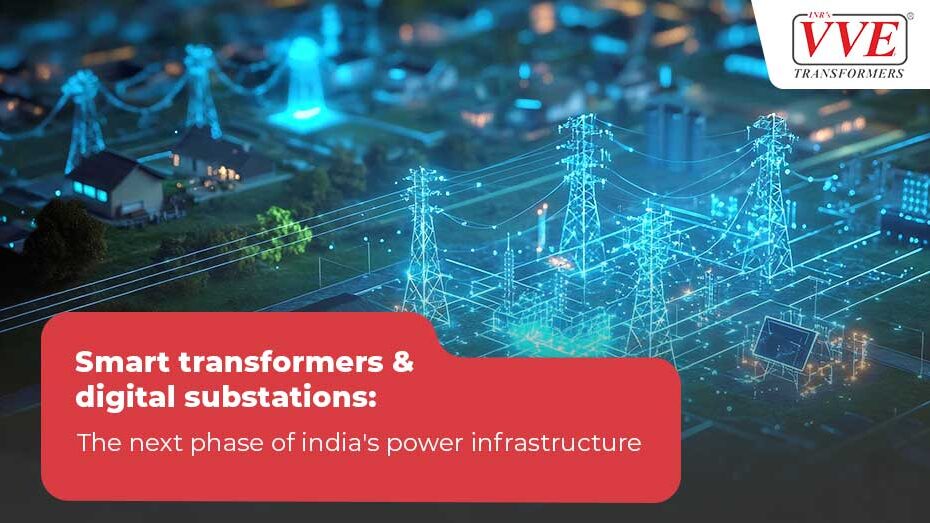
A changing power landscape needs smarter solutions
India’s power sector is undergoing a major transformation. Rapid industrialization, urban expansion, renewable energy integration and the growth of digital infrastructure are increasing the demand for reliable and efficient electricity networks.
At the heart of this transformation are transformers — the critical assets that enable power transmission and distribution. However, traditional transformers are now evolving into intelligent systems capable of monitoring performance, predicting failures and improving grid efficiency. Smart transformers and digital substations are emerging as key technologies shaping the future of power infrastructure.
The rise of smart transformers
Conventional transformers perform one primary function: voltage transformation. Smart transformers add advanced monitoring and communication capabilities, enabling real-time assessment of operational conditions.
Equipped with sensors and digital monitoring systems, smart transformers can track parameters such as temperature, load conditions, insulation health and energy efficiency. This data helps utilities and industries identify potential issues before they become major failures.
Predictive maintenance is one of the biggest advantages. Instead of relying only on periodic inspections, operators can use real-time insights to schedule maintenance activities based on actual equipment conditions. This reduces downtime, improves asset life and enhances operational reliability.
Digital substations transforming grid management
Digital substations represent another important development in modern power infrastructure. Unlike conventional substations that depend heavily on manual monitoring and physical connections, digital substations use advanced communication technologies for faster and more accurate control.
Technologies such as intelligent electronic devices, automation systems and digital communication networks allow substations to exchange information seamlessly. This improves fault detection, reduces response time and enables better management of increasingly complex power networks.
Supporting renewable energy integration
The transition towards renewable energy has created new challenges for grid stability. Solar and wind power generation can fluctuate depending on weather conditions, requiring flexible and responsive electricity systems. Smart transformers and digital substations help address these challenges by enabling better monitoring, load management and energy flow control.
As India increases its renewable energy capacity, intelligent power infrastructure will become increasingly important for maintaining grid reliability.
The role of industries in the smart grid transition
Industries across manufacturing, infrastructure, data centres and commercial facilities require uninterrupted power supply. Any disruption can lead to production losses and operational challenges. Smart transformer technologies provide industries with better visibility into their power systems, helping them improve efficiency and reduce unexpected failures.
For power equipment manufacturers, this shift creates opportunities to develop solutions aligned with the changing needs of modern industries.
Building power networks of tomorrow
The future of electricity infrastructure will depend not only on generating more power but also on managing it intelligently. Smart transformers and digital substations are becoming essential components of this transition, helping create power networks that are more reliable, efficient and responsive.
As India moves towards a more digital and sustainable energy ecosystem, intelligent transformer technologies will play a crucial role in powering the next phase of growth.